Azam Khan, Andrew Marsh
Simulation and the Future of Design Tools for Ecological Research
Architectural Design
2011

Abstract
As buildings mediate between a complex external system (weather) and a complex internal system (occupants), they are, themselves, bound to be complex systems with their own emergent behaviours. In his book How Buildings Learn: What Happens After They’re Built,1 Stewart Brand discusses buildings as responsive systems that acquire new ‘knowledge’ over time. This fits well with the human penchant for anthropomorphism, where we often see unpredictable response as ‘character’. Also, just as with a biological organism, we see gradual degradation in use, usefulness, durability, performance and maintenance as ‘aging’.
Related Publications
Loading...
Related Projects
-
![]()
Building Simulation
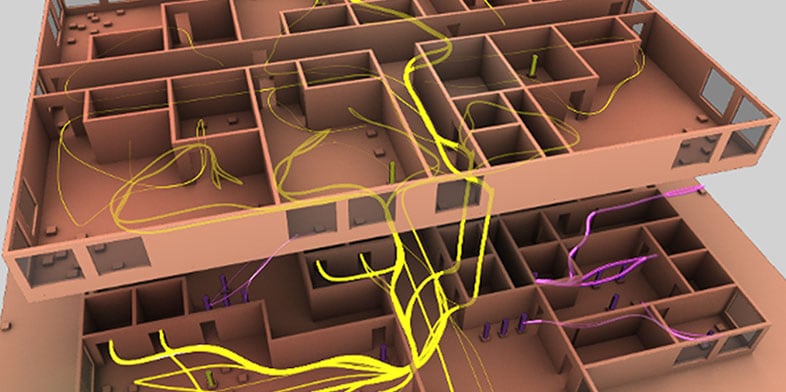
Buildings are the largest consumers of energy responsible for 48% of all Green House Gas (GHG) emissions. Due to the complexity and multidisciplinary aspects of architectural design, construction, urban design, and building occupant behavior, simulation has gained attention as a means of addressing this enormous challenge. The idea is to model a building’s many interacting subsystems, including its occupants, electrical equipment, and indoor and outdoor climate. With simulation results in hand, an architect is better able to predict the energy demand associated with various designs, and choose from among the more sustainable options.
-
-