
BICYCLE PARTS MANUFACTURING
From metals to pedals: Bicycle parts manufacturing
From metals to pedals: Bicycle parts manufacturing
The pace of change in modern bicycle parts manufacturing matches the blistering speed of the most enthusiastic cyclists. By utilizing the latest software, fabrication methods, and materials, bike parts manufacturers can win their customers’ loyalty.
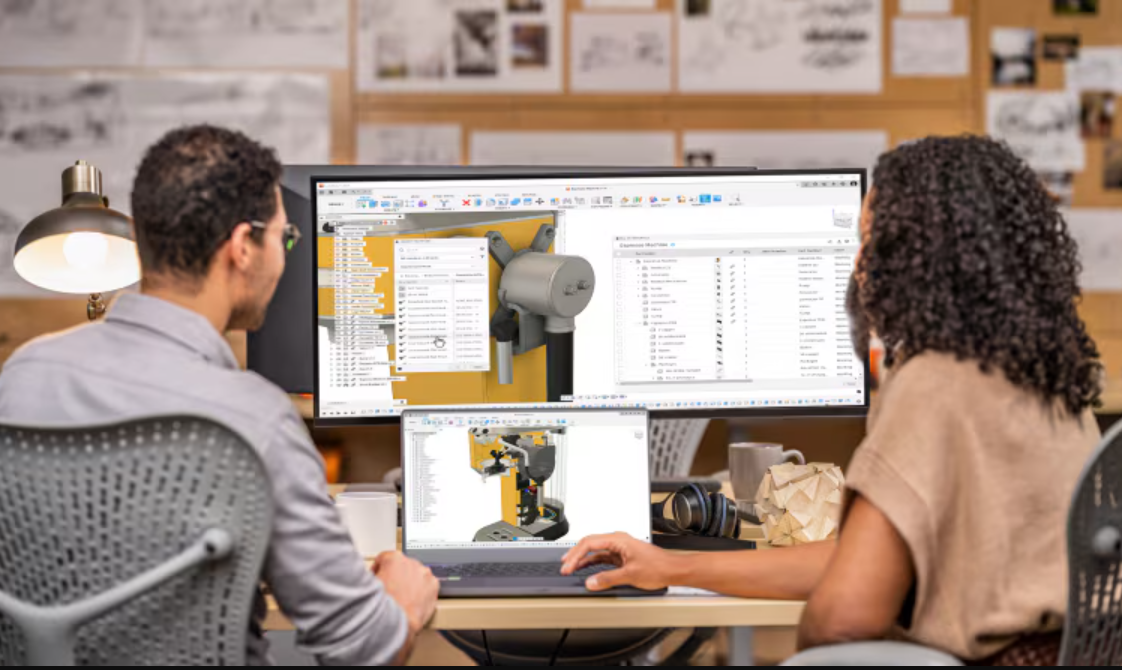
 Modern bicycle makers use advanced design software and manufacturing technology to craft precision products. Image courtesy of Marin Bikes.
What is bicycle parts manufacturing?
What is bicycle parts manufacturing?
Bicycle parts manufacturing is an industry where exacting customer desires and high-tech fabrication methods and materials converge to achieve results that continue to defy expectations.
With the combination of advanced software features like generative design, fabrication tools like CNC machines and 3D printers, and materials like titanium alloys for metal additive manufacturing, companies that design bike accessories and parts delight their customers with higher standards of performance and sustainability.
Bicycle parts manufacturing is an industry where exacting customer desires and high-tech fabrication methods and materials converge to achieve results that continue to defy expectations.
With the combination of advanced software features like generative design, fabrication tools like CNC machines and 3D printers, and materials like titanium alloys for metal additive manufacturing, companies that design bike accessories and parts delight their customers with higher standards of performance and sustainability.
Modern manufacturing technologies used for bicycle parts manufacturing
Manufacturing technologies
Manufacturing technologies
There’s never been a better time to be a cycling enthusiast, because bicycle parts manufacturers have never had a better set of advanced hardware and software tools at their disposal for crafting customer-focused, high-performance, and sometimes bespoke bike accessories and components. Both additive manufacturing (3D printing) and CNC machining manufacture bicycle components of complex geometries with tight dimensional tolerances. More tried-and-true bike parts manufacturing methods, like plastic injection molding and sheet metal fabrication, are still extremely relevant, often for high-volume production.
There’s never been a better time to be a cycling enthusiast, because bicycle parts manufacturers have never had a better set of advanced hardware and software tools at their disposal for crafting customer-focused, high-performance, and sometimes bespoke bike accessories and components. Both additive manufacturing (3D printing) and CNC machining manufacture bicycle components of complex geometries with tight dimensional tolerances. More tried-and-true bike parts manufacturing methods, like plastic injection molding and sheet metal fabrication, are still extremely relevant, often for high-volume production.

Benefits of software for bicycle parts manufacturing and design
Incorporating advanced CAD and CAM software into bicycle parts manufacturing and design results in valuable benefits across the board, including:
Incorporating advanced CAD and CAM software into bicycle parts manufacturing and design results in valuable benefits across the board, including:
Crafting complex components
With both CAD and CAM in one software, Autodesk Fusion facilitates accuracy in design and precise fabrication of intricate bike parts and components from a diverse selection of compatible materials. CAM features include automatic toolpaths and automatic data translation.
With both CAD and CAM in one software, Autodesk Fusion facilitates accuracy in design and precise fabrication of intricate bike parts and components from a diverse selection of compatible materials. CAM features include automatic toolpaths and automatic data translation.
Resource efficiency
Make efficient use of the resources of time, money, and materials. Bicycle parts manufacturing with CAD/CAM software and CNC machines can reduce material usage from human error and physical prototyping needs, as well as help streamline workflows to save time and cost.
Make efficient use of the resources of time, money, and materials. Bicycle parts manufacturing with CAD/CAM software and CNC machines can reduce material usage from human error and physical prototyping needs, as well as help streamline workflows to save time and cost.
Custom manufacturing
Autodesk Fusion lets you standardize CAM programming across your team, reduce programming times, and make CNC programming results more consistent—all contributing to faster bike parts manufacturing and making the custom manufacturing of bespoke parts more efficient.
Autodesk Fusion lets you standardize CAM programming across your team, reduce programming times, and make CNC programming results more consistent—all contributing to faster bike parts manufacturing and making the custom manufacturing of bespoke parts more efficient.
Higher-quality bicycle parts
Autodesk software like Fusion incorporates part inspection features, including intelligent part alignment, superior strategies for machining surfaces, advanced tool axis controls, and quality control processes—all leading to higher-quality outcomes.
Autodesk software like Fusion incorporates part inspection features, including intelligent part alignment, superior strategies for machining surfaces, advanced tool axis controls, and quality control processes—all leading to higher-quality outcomes.
Better collaboration
Cloud-connected bicycle parts manufacturing and design software from Autodesk allows real-time communication with collaborators anywhere in the world, as well as a single source of data updated in real time. This contributes to more informed decision making and a smoother collaborative workflow.
Cloud-connected bicycle parts manufacturing and design software from Autodesk allows real-time communication with collaborators anywhere in the world, as well as a single source of data updated in real time. This contributes to more informed decision making and a smoother collaborative workflow.
Generative design and simulation
The Fusion Simulation Extension includes generative design for optimizing bike parts’ designs for strength, weight, and other constraints, as well as simulations like finite element analysis (FEA) for virtually testing the parts’ responses to real-world stresses and forces.
The Fusion Simulation Extension includes generative design for optimizing bike parts’ designs for strength, weight, and other constraints, as well as simulations like finite element analysis (FEA) for virtually testing the parts’ responses to real-world stresses and forces.
NEW OFFER - Flex now starting at $99
Autodesk Flex lets you prepay with tokens for on-demand access to Fusion and advanced design and manufacturing capabilities, charged only when tools are in use. It’s ideal for project-based work or occasional access to specialized workflows. Combine Flex tokens with Fusion to:
Access advanced product development workflows on demand
Use high-value capabilities only when needed
Scale access for peak workloads
Autodesk software for bike parts manufacturing and design
See how our customers use Autodesk software for bike parts manufacturing

The pedals and metals of a sustainable micro-manufacturer
The pedals and metals of a sustainable micro-manufacturer
A cycling-based passion project became a sustainable bike parts manufacturing business when Phil Law founded PEMBREE with a handful of CNC machines and Autodesk Fusion. The carbon-neutral micro-factory cranks out hundreds of bicycle pedals a month with recyclable aerospace-grade aluminum alloy, using only renewable energy.
A cycling-based passion project became a sustainable bike parts manufacturing business when Phil Law founded PEMBREE with a handful of CNC machines and Autodesk Fusion. The carbon-neutral micro-factory cranks out hundreds of bicycle pedals a month with recyclable aerospace-grade aluminum alloy, using only renewable energy.

A service provider becomes its own manufacturer
A service provider becomes its own manufacturer
When available electric bicycles did not live up to the needs of its local delivery service, the Kyiv company Delfast decided to build a better e-bike. It started by manufacturing bicycle parts like a stronger frame using Autodesk Fusion, then moved on to entire bicycles, relying on Fusion’s simulation tests to all but give up physical prototyping.
When available electric bicycles did not live up to the needs of its local delivery service, the Kyiv company Delfast decided to build a better e-bike. It started by manufacturing bicycle parts like a stronger frame using Autodesk Fusion, then moved on to entire bicycles, relying on Fusion’s simulation tests to all but give up physical prototyping.

How to use less energy pedaling a bicycle
How to use less energy pedaling a bicycle
The bicycle parts manufacturer SRAM wanted to innovate on one of the most stagnant but important parts of a bicycle: the crank arm. SRAM turned to additive manufacturing and Autodesk Fusion’s generative design abilities to experiment. The resulting titanium crank arm was twice as strong as previous models, but 20% lighter, meaning the cyclist spends less energy to pedal.
The bicycle parts manufacturer SRAM wanted to innovate on one of the most stagnant but important parts of a bicycle: the crank arm. SRAM turned to additive manufacturing and Autodesk Fusion’s generative design abilities to experiment. The resulting titanium crank arm was twice as strong as previous models, but 20% lighter, meaning the cyclist spends less energy to pedal.
Bicycle parts manufacturing and design software resources
Aim93 bicycle frame design session at Autodesk University
See how Mike Burrows and Barney Townsend attempted to design the fastest bicycle in the world, turning to Autodesk CFD for aerodynamics analysis and Fusion for generative design of lightweight and optimized bicycle parts manufacturing.
See how Mike Burrows and Barney Townsend attempted to design the fastest bicycle in the world, turning to Autodesk CFD for aerodynamics analysis and Fusion for generative design of lightweight and optimized bicycle parts manufacturing.
Discover the power of precision machining
Precision machining employs the subtractive manufacturing processes of CNC machines to craft complex parts with the tightest of tolerances. Learn more, including how Autodesk software sets up and ensures the best results for precision-machined bicycle parts.
Precision machining employs the subtractive manufacturing processes of CNC machines to craft complex parts with the tightest of tolerances. Learn more, including how Autodesk software sets up and ensures the best results for precision-machined bicycle parts.
Optimize bike parts design using generative design software
Find out how Predator Cycling, a custom carbon fiber bicycle and bicycle parts manufacturer, entered the world of generative design using Fusion to rapidly alter design ideas and easily modify changes based on individual customer requirements.
Find out how Predator Cycling, a custom carbon fiber bicycle and bicycle parts manufacturer, entered the world of generative design using Fusion to rapidly alter design ideas and easily modify changes based on individual customer requirements.
Machining fundamentals: Introduction to post-processors
Learn all about post-processor files and why and where to get them for Autodesk Fusion. During bicycle parts manufacturing, post processors may be needed to convert generic toolpath information into code that specific CNC machines can understand.
Learn all about post-processor files and why and where to get them for Autodesk Fusion. During bicycle parts manufacturing, post processors may be needed to convert generic toolpath information into code that specific CNC machines can understand.
Generative design helps build the performance bike of the future
French sporting goods company Decathlon wanted to give each of its customers the experience of a professional cyclist, including a bicycle and bike accessories designed just for them. To achieve that, they relied on Autodesk Fusion’s generative design to optimize certain bike parts’ designs and to 3D print them with recyclable aluminum.
French sporting goods company Decathlon wanted to give each of its customers the experience of a professional cyclist, including a bicycle and bike accessories designed just for them. To achieve that, they relied on Autodesk Fusion’s generative design to optimize certain bike parts’ designs and to 3D print them with recyclable aluminum.
Custom manufacturing meets industry needs for unique products
User-centered bike parts design can often benefit from custom manufacturing, the highly configurable and flexible manufacturing methods that allow bespoke, built-to-order parts while keeping costs and production times in line.
User-centered bike parts design can often benefit from custom manufacturing, the highly configurable and flexible manufacturing methods that allow bespoke, built-to-order parts while keeping costs and production times in line.
Frequently asked questions (FAQ) on bicycle parts design and manufacturing
The manufacturing process of a bicycle begins with bike parts design in CAD modeling software, including materials selection. Next, the bicycle frame is usually produced from welded cut metal tubes or molded carbon fiber. Then, the remaining bicycle parts are manufactured, often requiring precision CNC machining and finishing.
Next comes assembly of the manufactured parts, followed by quality control and testing. If the customer has ordered custom touches like colors, finishes, or specific custom components, that has to be taken care of before the final steps of packaging and shipping.
The most common raw materials used in bicycle manufacturing and bicycle parts manufacturing are:
Aluminum, with different alloys that are lightweight, abundant, and durable against shock and corrosion
Steel, which is widely available, bendable, and good for different methods of assembly, although somewhat heavy
Titanium, which is exceptionally strong and long-lasting but requires special welding tools
Carbon fiber (graphite), which is excellent for shock absorption, but is expensive and difficult to recycle
Other materials popular for bike parts and bike accessories design include rubber, plastics, fabrics, and other composites.
Modern bike design requires a refined approach that combines engineering and materials science with user-centered design. Key requirements include the bike frame’s geometry, material selection, weight optimization (which can benefit from generative design software), aerodynamics (which can benefit from computational fluid dynamics software), ergonomics, safety, sustainability, the efficiency of the bicycle parts manufacturing process, and, if offering customization, the processes of custom manufacturing.
Technology affects every stage of modern bicycle manufacturing. Designers use software from the initial product sketching stage to CAD design and 3D visualization, and AI-assisted generative design can reveal otherwise unattainable efficiencies. Software simulation and testing are also highly accurate and save physical testing resources.
At the production stage, CNC machining and 3D printing, or additive manufacturing, make prototyping, custom manufacturing, and small-batch manufacturing more accessible and efficient, while robotic automation makes bicycle manufacturing at scale more consistent, safe, and efficient.
Cloud and AI technology even help with making bicycle manufacturing more sustainable by analyzing data for opportunities to reduce waste or to make the supply chain more environmentally friendly.
Manufacturing processes can be optimized for efficiency in a variety of ways. Linking design with manufacturing and operations by using software that combines CAD, CAM, and product lifecycle management (PLM) in one cloud platform improves efficiency, communication, and scalability. Automating manufacturing processes through robotics and/or CNC machining promotes better efficiency. And if those machines collect real-time performance data, analyzing that data can yield insights for fixing bottlenecks, predictive maintenance, supply chain optimization, improving quality control, and more.
The above initiatives may also require ongoing employee training and reskilling, which should also pay off in efficiency.