RAPID PROTOTYPING
Rapid prototyping software for efficient product development
Rapid prototyping software for efficient product development
Rapid prototyping is a cost-effective approach to product iteration that enables product design and engineering teams to easily test ideas and gain functional feedback early in the development cycle.

What is rapid prototyping software?
What is rapid prototyping software?
Rapid prototyping is one of the initial stages of product development where designers and engineers leverage various prototyping methods to achieve the best possible final product design. Digital and physical prototypes are frequently used to validate designs prior to manufacturing.
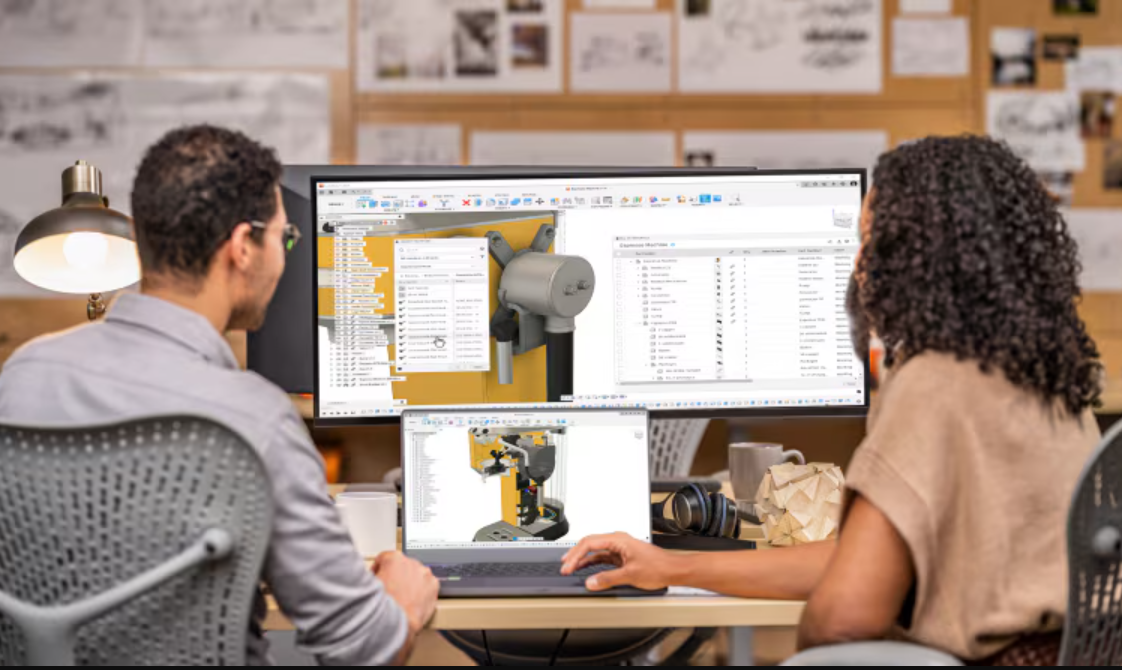
Rapid prototyping software like Autodesk Fusion enables teams to switch between 3D modeling, simulation, 3D printing, and electronics design tools as needed to iterate and react to design feedback digitally before moving on to physical prototyping. When ready, prototyping methods like 3D printing allow for the creation of quick physical mock-ups. The combination of these two methods makes rapid prototyping remarkably fast, cost-effective, and sustainable when compared to strictly physical prototyping.
Rapid prototyping is one of the initial stages of product development where designers and engineers leverage various prototyping methods to achieve the best possible final product design. Digital and physical prototypes are frequently used to validate designs prior to manufacturing.
Rapid prototyping software like Autodesk Fusion enables teams to switch between 3D modeling, simulation, 3D printing, and electronics design tools as needed to iterate and react to design feedback digitally before moving on to physical prototyping. When ready, prototyping methods like 3D printing allow for the creation of quick physical mock-ups. The combination of these two methods makes rapid prototyping remarkably fast, cost-effective, and sustainable when compared to strictly physical prototyping.

Who is involved in rapid prototyping?
Who is involved in rapid prototyping?
Rapid prototyping is a collaborative process that often involves full design and engineering teams. Mechanical engineers might provide input on a prototype’s material properties and performance, while industrial designers might provide aesthetic feedback. Other collaborators may validate the resulting prototypes for manufacturability and usability before production.
Rapid prototyping is a collaborative process that often involves full design and engineering teams. Mechanical engineers might provide input on a prototype’s material properties and performance, while industrial designers might provide aesthetic feedback. Other collaborators may validate the resulting prototypes for manufacturability and usability before production.
Benefits of rapid prototyping software
Enhance agility
Enhance agility
Rapid prototyping software leverages cloud collaboration and automation to boost efficiency and eliminate unnecessary processes from the onset of design through to production.
Rapid prototyping software leverages cloud collaboration and automation to boost efficiency and eliminate unnecessary processes from the onset of design through to production.
Elevate product quality
Elevate product quality
Quickly iterate, simulate, and prototype using integrated workflows to enhance product quality and dependability during early product development.
Quickly iterate, simulate, and prototype using integrated workflows to enhance product quality and dependability during early product development.
Minimize part flaws
Minimize part flaws
Digital prototyping tools, including simulation, engineering drawing generation, and data management decrease the likelihood of expensive defects.
Digital prototyping tools, including simulation, engineering drawing generation, and data management decrease the likelihood of expensive defects.
Faster time to market
Faster time to market
Refining your rapid prototyping process enhances productivity while lowering material expenses, engineering costs, and fixed overheads.
Refining your rapid prototyping process enhances productivity while lowering material expenses, engineering costs, and fixed overheads.
Tools for rapid prototyping
Discover the essential tools that streamline and accelerate your rapid prototyping process.

3D modeling
Build and modify detailed virtual models of your design concepts. Autodesk Fusion’s parametric and direct modeling tools allow you to easily create complex shapes and assemblies, optimizing for both aesthetics and functionality.

Simulation
Validate and optimize your designs through simulations before physical prototyping. Fusion’s Simulation Extension provides structural, thermal, and event analysis to ensure your prototype is robust and reliable.

Configurations
Streamline the design process by creating multiple product configurations quickly and easily. Autodesk Fusion allows users to adjust variables such as size, material, or part geometry to explore various design alternatives.

Generative design
Use AI-powered generative design to explore optimized design solutions based on specific constraints. This tool automates design exploration to produce lightweight and manufacturable prototypes.

3D printing
Prepare designs for 3D printing with seamless integration. Fusion provides tools to optimize your models for additive manufacturing, ensuring prototypes are efficiently produced and meet design specifications.

Parametric design
Leverage parametric design tools in Fusion to adjust key design dimensions and features easily. This flexibility allows you to quickly iterate on prototypes while maintaining design intent and relationships.

Data management
Manage design files, revisions, and collaboration in one unified platform. Fusion’s cloud-based platform ensures that all team members have access to the latest version of your prototype at all times.

CAM (Computer-Aided Manufacturing)
Convert your 3D designs into toolpaths for CNC machining. Autodesk Fusion’s integrated CAM tools allow for seamless transition from design to prototype manufacturing.
Industries that use rapid prototyping software
Rapid prototyping is the go-to prototyping strategy across many industries.
Rapid prototyping is the go-to prototyping strategy across many industries.

Automotive
Automotive
The automotive industry, especially the aftermarket sector, relies heavily on rapid prototyping for developing parts and vehicle concepts under tight deadlines.
The automotive industry, especially the aftermarket sector, relies heavily on rapid prototyping for developing parts and vehicle concepts under tight deadlines.

Medical devices
Medical devices
Rapid prototyping has been indispensable for producing devices in the medical industry such as surgical instruments, prosthetics, implants, and more.
Rapid prototyping has been indispensable for producing devices in the medical industry such as surgical instruments, prosthetics, implants, and more.

Aerospace
Aerospace
In the demanding aerospace industry, rapid prototyping contributes to creating components, structures, and concept designs for aircraft and spacecraft.
In the demanding aerospace industry, rapid prototyping contributes to creating components, structures, and concept designs for aircraft and spacecraft.

Consumer products
Consumer products
Every product design goes through multiple prototypes before reaching its final production state.
Every product design goes through multiple prototypes before reaching its final production state.
Optimized data solutions for rapid prototyping excellence
Optimized data solutions for rapid prototyping excellence
Fusion enhances rapid prototyping by integrating real-time updates and seamless collaboration across design, engineering, and manufacturing stages, boosting efficiency throughout the process.
NEW OFFER - Flex now starting at $99
Autodesk Flex lets you prepay with tokens for on-demand access to Fusion and advanced design and manufacturing capabilities, charged only when tools are in use. It’s ideal for project-based work or occasional access to specialized workflows. Combine Flex tokens with Fusion to:
Access advanced product development workflows on demand
Use high-value capabilities only when needed
Scale access for peak workloads
Autodesk solutions for rapid prototyping software
Rapid prototyping case studies

Rivian’s rapid prototyping team
Rivian’s rapid prototyping team
Each month, the rapid prototyping team within Rivian’s special projects team fields hundreds of requests from the design studio, engineering, and manufacturing teams.
Each month, the rapid prototyping team within Rivian’s special projects team fields hundreds of requests from the design studio, engineering, and manufacturing teams.

Photocentric
Photocentric
Photocentric leverages rapid prototyping tools in Fusion to design and manufacture 3D printers that produce various parts and products for industrial applications.
Photocentric leverages rapid prototyping tools in Fusion to design and manufacture 3D printers that produce various parts and products for industrial applications.

boAt Lifestyle
boAt Lifestyle
See how boAt Lifestyle leverages Autodesk Fusion to design the top audio wearable and truly wireless stereo products in India.
See how boAt Lifestyle leverages Autodesk Fusion to design the top audio wearable and truly wireless stereo products in India.

“Autodesk Fusion has reduced the barriers of entering fabrication, learning, and execution for the team. Its simplicity allows someone without a more traditional engineering background to work on mechanical designs for new products, opening up possibilities and allowing us to focus on creation.”
“Autodesk Fusion has reduced the barriers of entering fabrication, learning, and execution for the team. Its simplicity allows someone without a more traditional engineering background to work on mechanical designs for new products, opening up possibilities and allowing us to focus on creation.”
— Samantha Melnyk, Designer, KORG Berlin
— Samantha Melnyk, Designer, KORG Berlin
Rapid prototyping resources
What is rapid prototyping?
Learn how rapid prototyping differs from other prototyping methods and how Fusion 360 software helps to execute it.
Learn how rapid prototyping differs from other prototyping methods and how Fusion 360 software helps to execute it.
Industrial design prototyping explained
Discover the different methods of industrial design prototyping and the advantages of rapid prototyping.
Discover the different methods of industrial design prototyping and the advantages of rapid prototyping.
Guide for 3D printing at home
Whether you’re an engineer or a hobbyist, 3D printing from home with the help of rapid prototyping software such as Fusion 360 has never been more convenient.
Whether you’re an engineer or a hobbyist, 3D printing from home with the help of rapid prototyping software such as Fusion 360 has never been more convenient.
Frequently asked questions (FAQ) on rapid prototyping
Rapid prototyping is a modern, iterative approach that focuses on quickly producing models using digital design tools and technologies like 3D printing, while traditional prototyping often involves manual or slower manufacturing processes. With rapid prototyping, designers can iterate more frequently, test various configurations, and refine models based on real-time feedback, all within a fraction of the time required by traditional methods. In contrast, traditional prototyping tends to be more time-consuming and costly, often requiring multiple physical models to be created before arriving at a final design.
Rapid prototyping streamlines product development by allowing designers and engineers to test ideas early and often. Instead of waiting for a complete design to be finalized, teams can produce prototypes at various stages, identifying flaws, making adjustments, and iterating quickly. This process not only reduces the time to market but also minimizes costs by catching potential issues before full-scale manufacturing. In tools like Autodesk Fusion, designers can even run simulations before moving to physical prototyping, further accelerating development by validating performance digitally.
Rapid prototyping typically utilizes three main technologies: additive manufacturing (like 3D printing), subtractive manufacturing (such as CNC machining), and molding techniques (like silicone molding). Autodesk Fusion supports these methods by providing 3D design, simulation, and CAM tools that ensure prototypes are manufacturable, reducing the need for costly and time-consuming revisions.
Additive manufacturing: Builds parts layer by layer, ideal for complex geometries.
Subtractive manufacturing: Removes material from a solid block to create parts.
Rapid prototyping is highly versatile and can be applied to both small-scale projects and large, complex industrial designs. Whether you're designing a small consumer product or a large, intricate component for aerospace, the ability to quickly test and iterate is invaluable. With tools like Autodesk Fusion, rapid prototyping can be scaled to fit the needs of any project, from single-part prototypes to large assemblies. The combination of 3D modeling, simulation, and CAM allows engineers to prototype efficiently, regardless of project size.
Choosing the right materials depends on the function of your prototype. In early-stage prototyping, designers may use cheaper materials like PLA or ABS plastics for 3D printing, allowing them to test form and fit before moving to more expensive or specialized materials. For more advanced prototypes that will be closer to the final product, materials like metals or carbon fiber composites may be necessary. Autodesk Fusion’s simulation tools allow users to test different materials’ performance under stress or heat, helping make informed decisions before committing to physical production.
Absolutely. Autodesk Fusion’s parametric modeling and design configuration tools allow for rapid design iterations, enabling you to quickly explore different design possibilities and make changes without starting from scratch. For example, you can adjust dimensions, modify geometries, or change material properties with a few clicks. This flexibility shortens the prototyping cycle by allowing real-time adjustments and automatic updates to related components, saving both time and effort.
Rapid prototyping helps address several key challenges in the design process, such as:
Design validation: Quickly testing designs for functionality, usability, and manufacturability.
Iterative improvement: Allowing for multiple rounds of iteration without extensive costs or delays. With Autodesk Fusion, you can simulate different real-world conditions like load-bearing capacity or heat resistance, ensuring your prototype performs as expected before moving to production. This reduces risks and helps refine designs faster.
Rapid prototyping significantly reduces costs by allowing you to test and refine designs early in the development process, before investing in expensive tooling or full-scale manufacturing. By using digital design tools like those in Autodesk Fusion, teams can identify potential design flaws or performance issues through simulation, minimizing the need for physical prototypes and reducing the number of costly iterations. The ability to test different materials, geometries, and configurations digitally also helps optimize the final product without incurring unnecessary expenses.
Fusion’s cloud-based platform allows for real-time collaboration, easy file sharing, and version control, ensuring that all team members have access to the latest design iterations. This enables faster feedback loops and more efficient workflows, as designers and engineers can work on the same prototype simultaneously, making adjustments as needed. The platform also integrates with 3D printing and manufacturing systems, allowing users to quickly transition from digital designs to physical prototypes, speeding up the entire rapid prototyping process.