& Construction

Integrated BIM tools, including Revit, AutoCAD, and Civil 3D
& Manufacturing

Professional CAD/CAM tools built on Inventor and AutoCAD
Digital transformation is delivering measurable results across Design and Make industries. Nearly every organization (98%) reports measurable business benefits, and almost half (49%) say they have made substantial progress toward their transformation goals.
At the same time, fewer organizations now describe themselves as digitally mature. The share identifying as digitally mature has fallen from 63% in 2024 to 44% in 2027, even as organizations continue making progress. Rather than signaling slower transformation, this shift suggests leaders are redefining what digital maturity requires as artificial intelligence (AI), connected data, automation, and cloud technologies reshape how work gets done.
Capabilities that once distinguished digital leaders are rapidly becoming expected. Digital maturity is evolving from a destination organizations reach into a capability they continually strengthen as technology, customer expectations, and markets continue to change.
– Jeff Kinder, Autodesk EVP, Product Development and Manufacturing Solutions
of business leaders report measurable digital transformation benefits
of organizations now describe themselves as digitally mature vs. 63% in 2024
of Pacesetters are more likely to focus on digital products and services than mainstream orgs at 60%
Survey question: We identified the following as top benefits of digital transformation. In the past three years, how much has digital transformation improved [benefit]? 6-point scale: “Marginally;” “moderately, by 25%;” “considerably, by 50%;” “significantly, by 75%;” “drastically, by 100%;” “we don't see this benefit.” Percent selected. Numbers do not add up to 100% due to rounding.
The business case for digital transformation is increasingly clear. Two-thirds of organizations report improvements of at least 50% in customer satisfaction, productivity, and innovation. Roughly one in three say those outcomes have improved by 75% or more.
The conversation has shifted from whether digital transformation works to how organizations can continue building on that foundation.
Survey question: What are the barriers to digital transformation in your company or organization? Percent selected, multiple responses allowed. Mainstream and Pacesetter definitions.
Cost remains a significant challenge, but organizations increasingly recognize that workforce capability—not technology itself—is becoming the limiting factor in continued progress.
Fifty-six percent cite at least one skills-related barrier, compared with 37% who identify cost as their primary obstacle.
– Keisuke Mito, Digital Construction Platform Department Manager, Shimizu Corporation, a construction company based in Tokyo, Japan
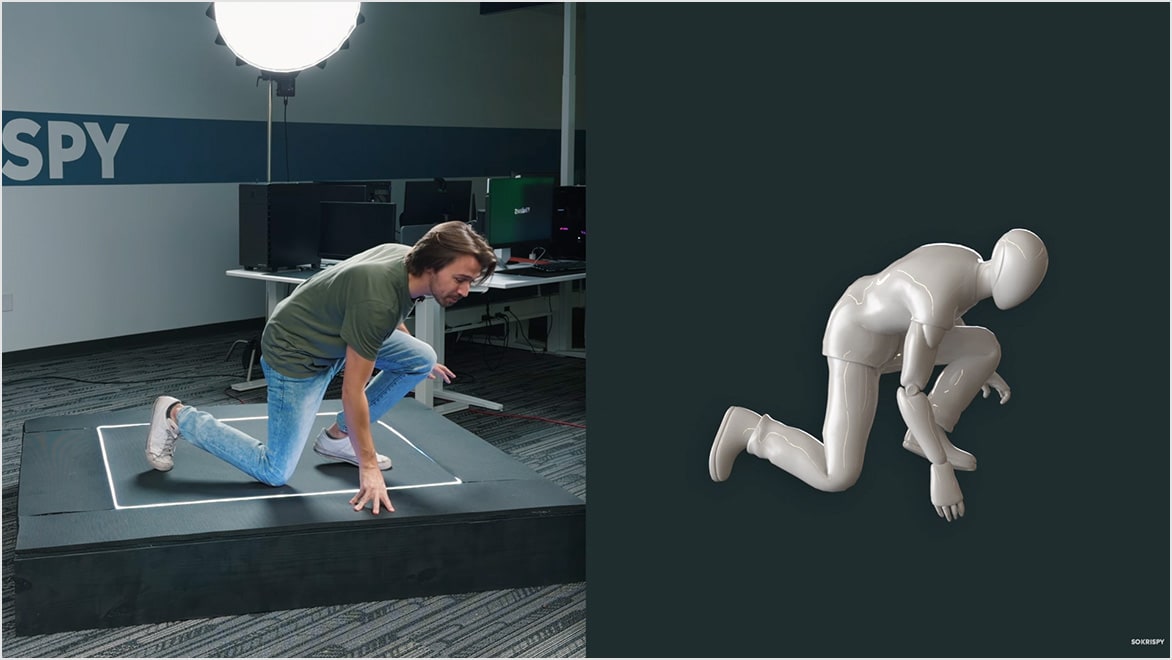
When MrBeast raised the stakes for Beast Games Season 2, SOKRISPYMEDIA had to match blockbuster production demands without blockbuster infrastructure.
Using AI-powered motion capture, they converted live-action footage into editable 3D scenes, merging previsualization and final look development.
The results proved the right tools can close the gap with the biggest production houses.
Survey question: Has your company or organization experienced any of the following benefits of digital transformation? Percent selected, multiple responses allowed. Mainstream and Pacesetter definitions.
– Niels Treldal, Senior Technical Director, COWI, a global engineering and consulting firm with roots in Scandinavia
Technology alone does not explain why Pacesetters outperform. They face many of the same pressures as mainstream organizations, but they are better equipped to move through them. Compared with mainstream organizations, they are more likely to prioritize digital products and services (88% vs. 60%), help ensure the accuracy of internal data (93% vs. 74%), and continue increasing technology investment.
Those investments are supported by stronger organizational capabilities, including connected data and integrated workflows, and increased readiness to adapt as technology evolves. That combination—not technology alone—helps explain why Pacesetters consistently outperform mainstream organizations across productivity, innovation, customer satisfaction, profitability, 88% resilience, and business decision making.